Tree Stewards Help to Protect Our Riverview Tree Canopy
by May Wady
Last June, Trees Riverview (TR) launched its Tree Steward program to monitor the condition of the over 150 young trees the organization has planted under contract in the past half-decade. The program was initiated so that tree damage or potential for tree damage could be reported in early stages to save trees from more damage and potential death. Since then, 13 volunteers from our neighbourhood have stepped up to act as TR Tree Stewards, regularly checking on how these trees on our boulevards and at the Riverview Community Centre are faring.
Risks to tree health come from a variety of sources. Unfortunately, as our deer population increases, young Riverview trees have sustained increasingly more damage from male deer in the fall rut. Occasionally, boulevard work, snowplowing, disease and pests, vandalism, or removal, damage or kill our boulevard trees. Over the past year, reports by tree stewards have led to timely replacement of trees that died within the two-year warranty period, and to quick intervention by the City of Winnipeg Urban Forestry Branch to place stakes and fencing around public trees severely damaged by male deer in November 2025.
As tree stewards monitor their trees and share information about them, they are helping TR learn more about trees and to share that information with Riverview community members and the Urban Forestry Branch (UFB). Last summer, a tree steward reported green bumps on the leaves of a Hackberry tree and TR learned about the Hackberry Nipple Gall (Happily, galls do not usually cause too much stress to trees, and knowing about the bumps on Hackberry trees helped to identify these trees.) The UFB is modifying how it protects trees from deer damage when they are planted, and how the risks are assessed during fall rut, in part from Tree Steward reports of damage. Trees Riverview will use on-the-ground data collected by the tree stewards to share information with UFB and inform their experiments with what approaches are the most successful.
While most of our tree stewards wish to continue, we do have some TR planted trees without a steward. As a tree steward, your job is to check up on your trees on a schedule that works for you. This could be once a week or once every 2 weeks or so. Each time you check on your trees you look for changes in the tree’s condition and its environment, and if there are notable changes you report them to the TR Tree Steward Co-ordinator. You will be provided with a list of your trees including location, species, and most recent condition. Often tree stewards live near the trees they are monitoring, or the trees are on a regular walking route. Currently available blocks and trees are:
Arnold Ave: Hay to Casey: 7 trees; Casey to Fisher: 10 trees; Fisher to Eccles: 8 trees
Arnold Ave Park: 10 trees
Fisher: Baltimore to Ashland: 2 trees
Baltimore: Fisher to Mabel: 11 trees.
Oakwood: Hay to Fisher: 4 trees
Bartlet: Osborne to Casey: 6 trees
It is possible to pick one or more blocks depending on your time and interest. If you are interested in becoming a tree steward, please contact Trees Riverview at treesriverview@gmail.com.
The TR executive is excited about how Tree Stewards are helping to prevent or mitigate damage to TR trees and about the tree protection ideas that come from Tree Stewards observations. Thanks to our Tree Steward volunteers!!
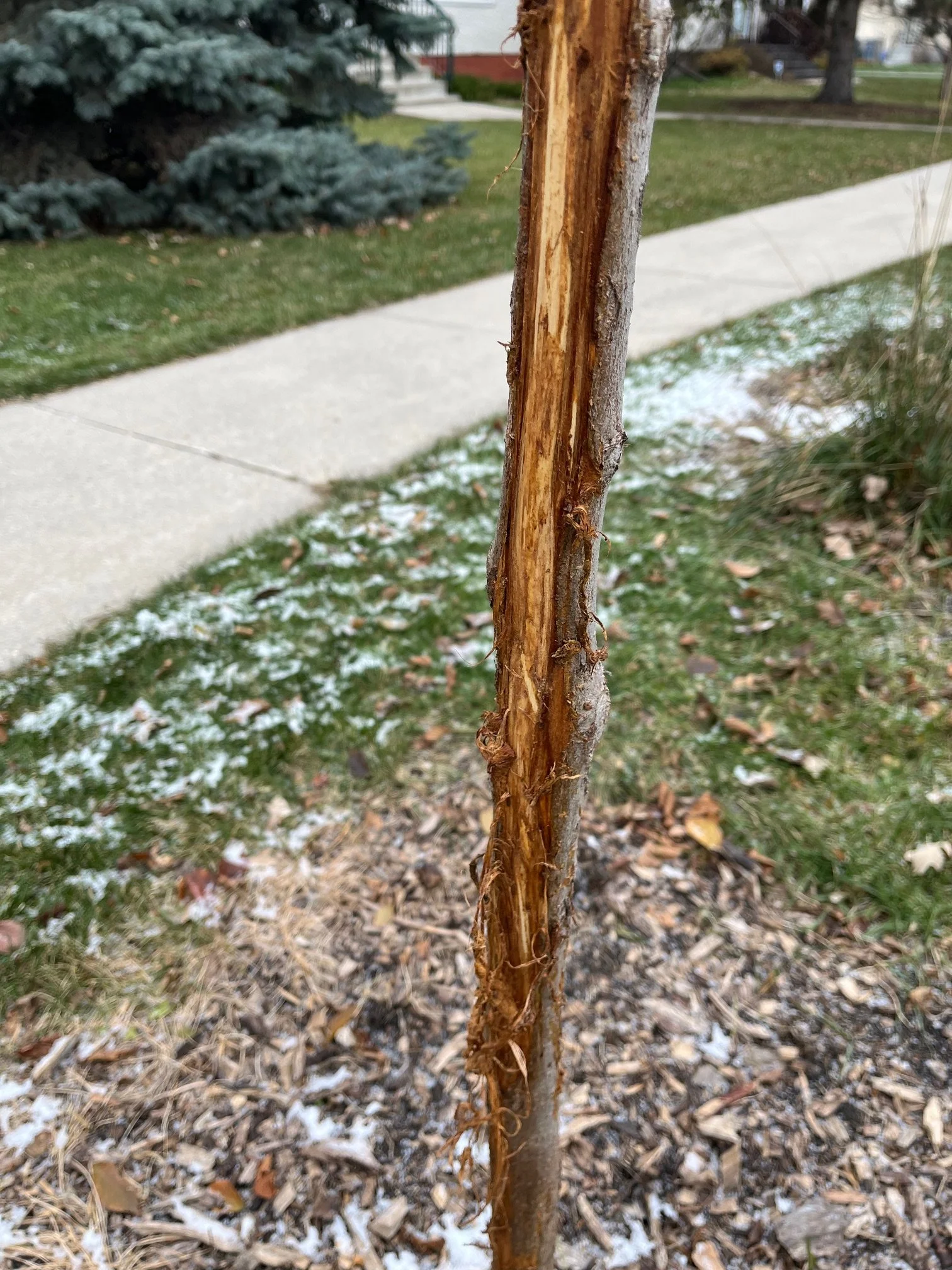
Deer damage to young tree during fall rut. Photo Credit: Wendy Botkin
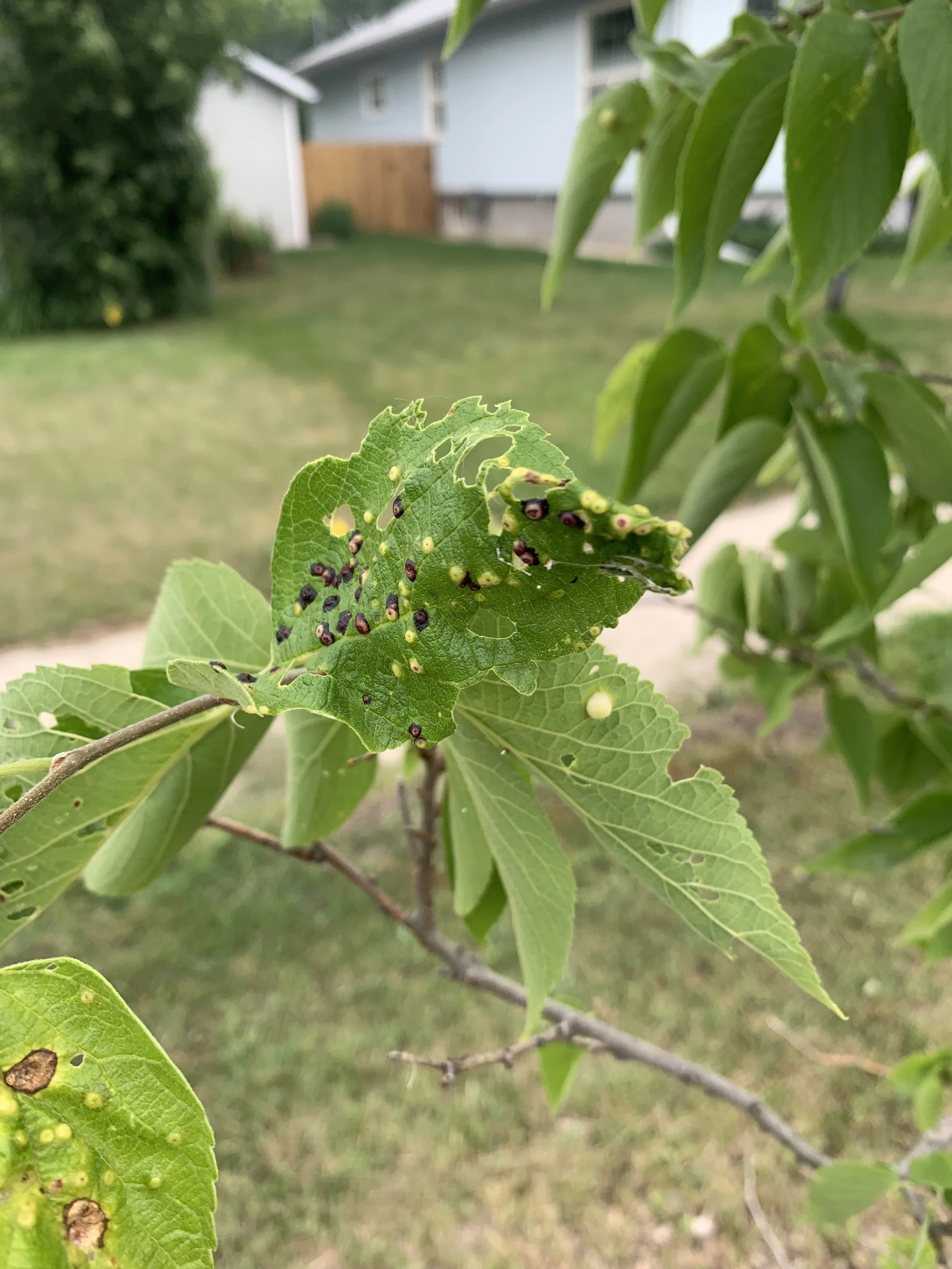
A Trees Riverview Tree Steward identified the ‘Hackberry Nipple Gall” on some newly planted trees.
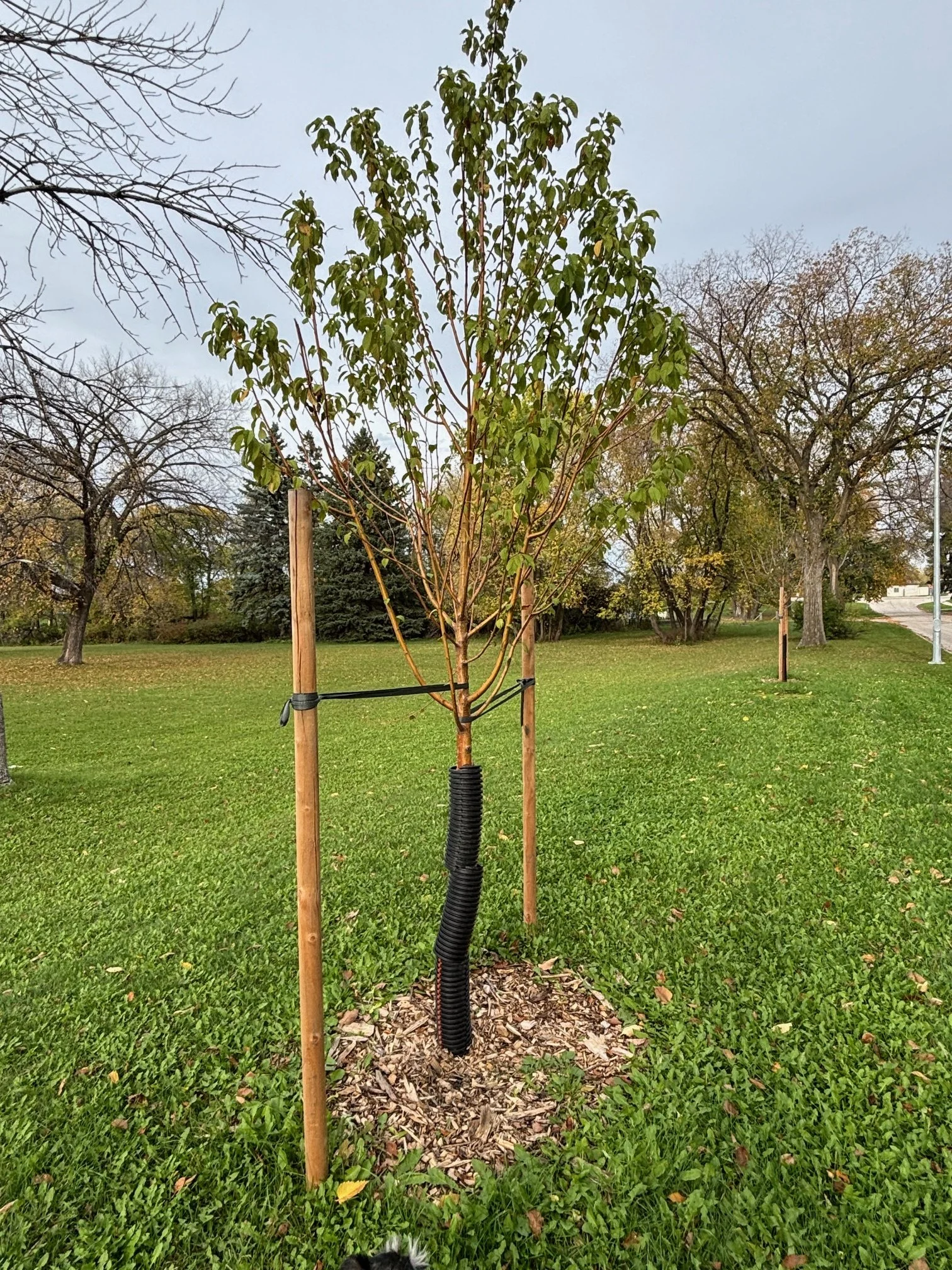
Tree Steward information contributes to the Urban Forest Branch’s knowledge about protecting newly planted trees. New plantings in our neighbourhood in 2025 had increased deer protection measures with three sections of weeping tile around the trunk to protect from deer at higher levels, instead of just one layer for rodent protection at the base of the trunk. Photo Credit: Wendy Botkin